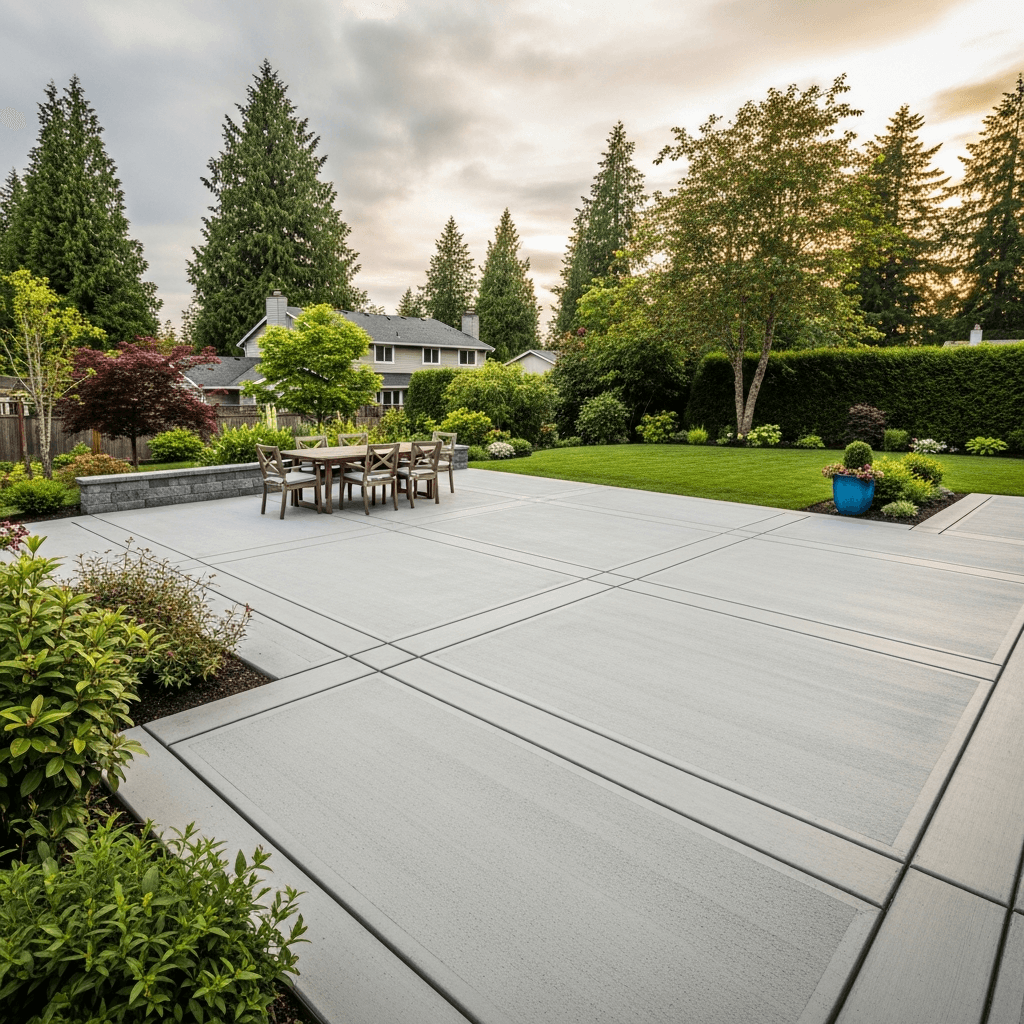
Stamped concrete in BC's Lower Mainland typically costs between $13 and $25+ per square foot, depending on the pattern, number of colors, base preparation, and site access. For a 200 sq ft patio, that puts the total roughly between $2,600 and $5,000+.
The wide range comes down to one thing: stamped concrete is a finishing process on top of a concrete pour, and both the pour and the finishing have their own cost drivers. A simple one-color ashlar slate stamp on a flat slab is a completely different job than a multi-color European fan pattern on a sloped backyard with tight access.
Typical Cost by Pattern Complexity
Pattern Type
Cost / Sq Ft
Notes
Single Pattern, One Color
$13 – $17
Ashlar slate, basic brick. Most economical stamp option.
Single Pattern, Two Colors
$16 – $20
Base color + release agent contrast. Most popular choice.
Multi-Pattern or Borders
$18 – $23
Pattern transitions, decorative borders, more layout time.
Custom / Complex
$22 – $25+
European fan, radial patterns, 3+ colors, hand-detailing.
Disclaimer: The figures above are based on Lower Mainland averages and are intended for educational purposes only. Actual costs vary on a job-to-job basis as material markets move, supply and demand shift, and municipal bylaws change. A free on-site consultation is the only way to get an accurate estimate for your specific project.
What Drives Stamped Concrete Cost
The Concrete Itself
Stamped concrete starts with a standard concrete pour — ready-mix delivered by truck, formed, reinforced, and placed. Everything that affects a regular concrete driveway or patio pour applies here too: base prep, access, grade, reinforcement, concrete supply, and pump truck if needed.
Color Hardener & Release Agent
Color is applied in two layers. An integral color or color hardener is broadcast onto the wet concrete for the base tone. Then a release agent (usually a contrasting color) prevents the stamps from sticking and adds depth to the finished pattern. More colors means more material and more finishing time.
Pattern Complexity & Timing
This is the biggest variable in stamped concrete cost. Stamping is a race against the clock — the concrete has to be at exactly the right stage of curing when the stamps go down. Too early and the pattern won't hold. Too late and the stamps won't imprint. Complex patterns with borders, transitions, or radial layouts take longer to place and require more crew on site.
Sealing
Every stamped concrete surface needs a sealer to protect the color and pattern. The sealer also gives the surface its sheen — matte, satin, or high-gloss. This is a separate step that happens after curing, and it's not optional. Without it, the color fades and the surface wears unevenly.
Stamped Concrete vs Other Finishes
Stamped concrete sits at the premium end of concrete finishes. For comparison:
Broom finish ($8–$11/sq ft) — Most economical. Standard grip texture, no color.
California smooth ($10–$13/sq ft) — Clean modern look with more finishing labor.
Exposed aggregate ($12–$15/sq ft) — Stone revealed through wash process. Natural look.
Stamped ($13–$25+/sq ft) — Highest labor and material cost. Widest design range.
The right finish depends on where the concrete goes, how you use the space, and what aesthetic you're after. Stamped concrete gives you the most design flexibility — but if you want a clean modern look, a California smooth finish can achieve that at a lower cost.
Where Stamped Concrete Works Best
Stamped concrete is most commonly used for:
Patios and outdoor entertaining areas — the most popular application in the Lower Mainland
Front walkways and entryways — curb appeal with a natural stone look
Pool decks — slip-resistant textures available for wet areas
Driveway accents — stamped borders with a broom or exposed aggregate center
We don't recommend stamped concrete for high-traffic driveways where heavy vehicles park regularly. The sealer wears faster under tire traffic, which means more frequent resealing. For driveways, exposed aggregate or broom finish often makes more sense long-term.
Maintenance & Long-Term Costs
Stamped concrete requires resealing every 2–4 years to maintain its color and protection. In the Lower Mainland, our climate accelerates wear — rain, moss, and UV all affect the sealer. Resealing is a fraction of the original cost, but it's a recurring expense you should budget for.
Properly installed and maintained, stamped concrete lasts 25+ years. The pattern is in the concrete itself — it doesn't fade or shift like pavers can. The sealer protects the color, and the concrete underneath is the same structural slab as any other pour.
Get Your Free Estimate
Every project starts with a free on-site consultation. We assess your site, discuss your goals, and provide a transparent, itemized estimate.
What to Ask Your Contractor
When comparing stamped concrete quotes, make sure each one covers:
Pattern and color selection — are samples available before you commit?
Base preparation — depth, material, compaction method
Concrete specification — PSI, reinforcement, air entrainment
Concrete supply and delivery — including pump truck if needed
Color hardener and release agent — brands and application method
Sealer type and application — solvent-based vs water-based, number of coats
Permits and inspections — included or extra?
Resealing schedule — when and what it costs going forward
A good stamp job is all about timing, experience, and proper base work. The cheapest quote is rarely the best value — because if the color fades in two years or the slab cracks from poor base prep, you're paying twice.
Ready to Start?
Get Your Free Estimate
Tell us about your project and we'll get back to you with a free, no-obligation estimate. We service the entire Lower Mainland.