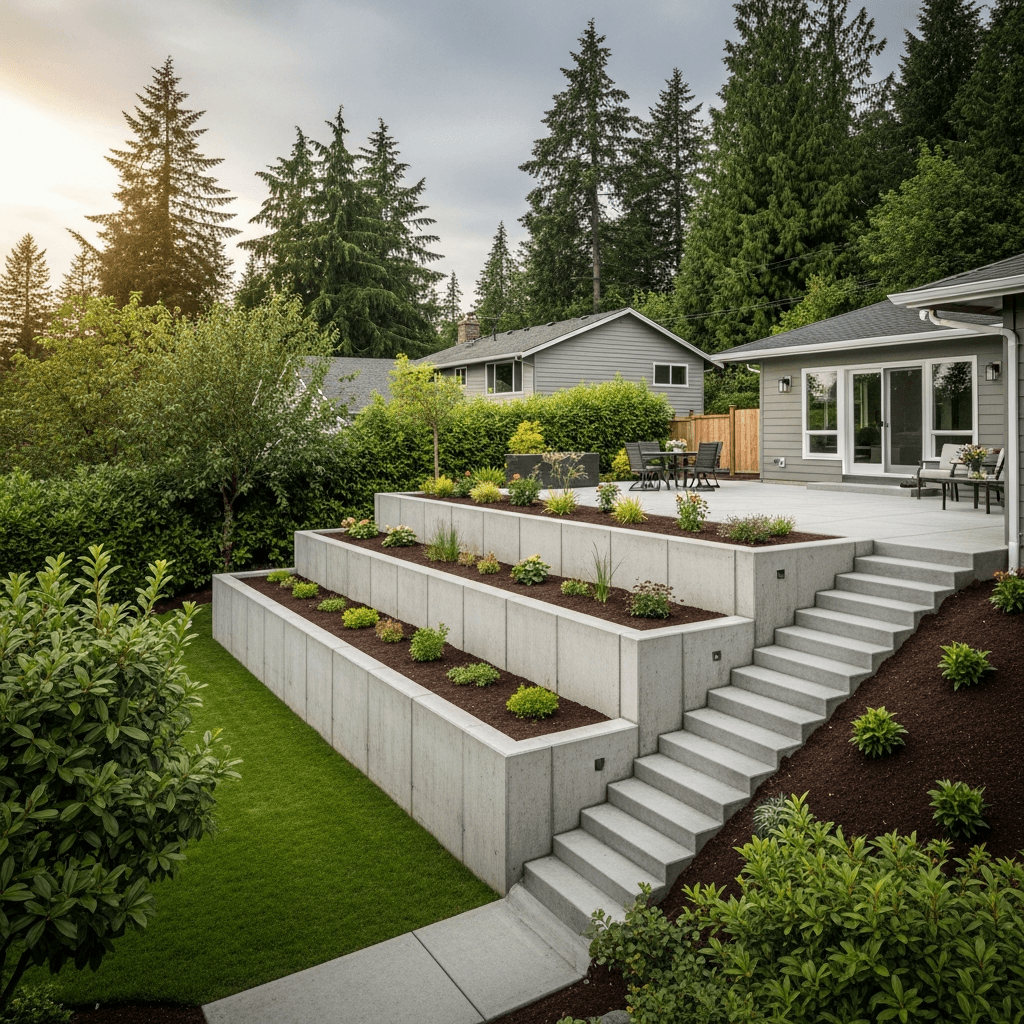
The short answer: it depends on the height and your municipality. Most cities in BC's Lower Mainland require a building permit for retaining walls over 4 feet (1.2m) — but the exact threshold, engineering requirements, and inspection process vary from city to city.
Building a retaining wall without a required permit can result in fines, a stop-work order, or being forced to remove the wall entirely. Here's how to know what applies to your project.
The General Rule in BC
The BC Building Code provides the baseline, but each municipality adopts and sometimes modifies these requirements through local bylaws. The general pattern across the Lower Mainland:
Under 4 Feet (1.2m) — Usually No Permit
Most municipalities allow retaining walls under 4 feet without a building permit. However, this doesn't mean "anything goes." The wall still needs to meet setback requirements from property lines, and some cities have additional restrictions near easements, waterways, or slopes.
4 to 6 Feet (1.2m – 1.8m) — Permit Required
This is where most permit requirements kick in. A building permit typically requires:
Completed application form with site plan
Structural engineering drawings with an engineer's stamp
Site survey showing property lines and existing grades
Drainage plan showing how water is managed behind and around the wall
Over 6 Feet (1.8m) — Full Engineering Required
Walls above 6 feet are treated as significant structures. In addition to a building permit, you typically need:
Geotechnical report — soil analysis, bearing capacity, water table
Structural engineering — full wall design with rebar schedule, footing specs
Multiple inspections — footing, rebar, backfill, and final
Possible tiered design requirement — some cities won't allow a single wall above a certain height
City-by-City Overview
While the 4-foot threshold is the most common trigger, each municipality has its own variations:
Building permit required for retaining walls over 4 feet. Engineering stamp required. The city also regulates walls near property lines and in flood-prone areas. Surrey has specific requirements for walls that retain fill near structures.
Building permit required for walls over 4 feet. Burnaby has additional restrictions on walls near ravines and environmentally sensitive areas. Geotechnical reports are commonly required on hillside properties.
Permit required for walls over 4 feet. Coquitlam has strict requirements for walls on slopes and near watercourses. The city may require a development permit in addition to a building permit for walls that alter the natural grade significantly.
Given the steep terrain, North Vancouver has some of the most stringent retaining wall regulations in the Lower Mainland. Geotechnical reports are commonly required even for shorter walls on slopes. The District and City have slightly different requirements — we confirm which jurisdiction your property falls under.
Building permit required for retaining walls over 4 feet. Properties near the Fraser River or in flood-designated areas have additional requirements. Maple Ridge requires specific drainage provisions for walls that affect water flow patterns.
Vancouver follows the 4-foot threshold for building permits. The city has additional requirements in heritage areas and near trees protected under the Protection of Trees Bylaw. Walls near property lines may require a survey to confirm placement.
Can You Build Two Short Walls Instead of One Tall Wall?
Homeowners sometimes ask if they can avoid the permit threshold by building two 3-foot walls instead of one 6-foot wall. The answer: it depends on the spacing.
Most municipalities have rules about tiered (stepped) retaining walls. If the walls are too close together, they're considered a single structure and the heights are combined for permit purposes. The typical minimum separation is 1.5x to 2x the height of the lower wall.
Tiered walls can actually be the better engineering solution for tall grade changes — they reduce soil pressure on each wall and create usable terraced space between levels. But they're not a permit loophole — they're a legitimate design approach that needs to be properly engineered.
What Happens if You Build Without a Permit
Building a retaining wall without a required permit creates several risks:
Stop-work order — the city can halt construction until a permit is obtained
Fines — municipalities charge penalties for unpermitted construction
Removal order — in serious cases, you may be required to demolish the wall
Insurance issues — damage caused by an unpermitted structure may not be covered by your home insurance
Sale complications — unpermitted work can delay or derail a home sale when the buyer's inspector or lender flags it
Liability — if an unpermitted wall fails and damages a neighbor's property, you have significant liability exposure
Get Your Free Estimate
Every project starts with a free on-site consultation. We assess your site, discuss your goals, and provide a transparent, itemized estimate.
How We Handle Permits
We research your municipality's specific bylaws before we quote. Every retaining wall estimate includes permit costs, engineering fees (if required), and inspection scheduling. You know exactly what's required before any work starts — not after.
We also coordinate with engineers and surveyors directly, so you don't have to manage multiple contractors. The permit process adds timeline — typically 2–6 weeks for approval depending on the city — but it protects your investment and ensures the wall is built to last.
Ready to Start?
Get Your Free Estimate
Tell us about your project and we'll get back to you with a free, no-obligation estimate. We service the entire Lower Mainland.