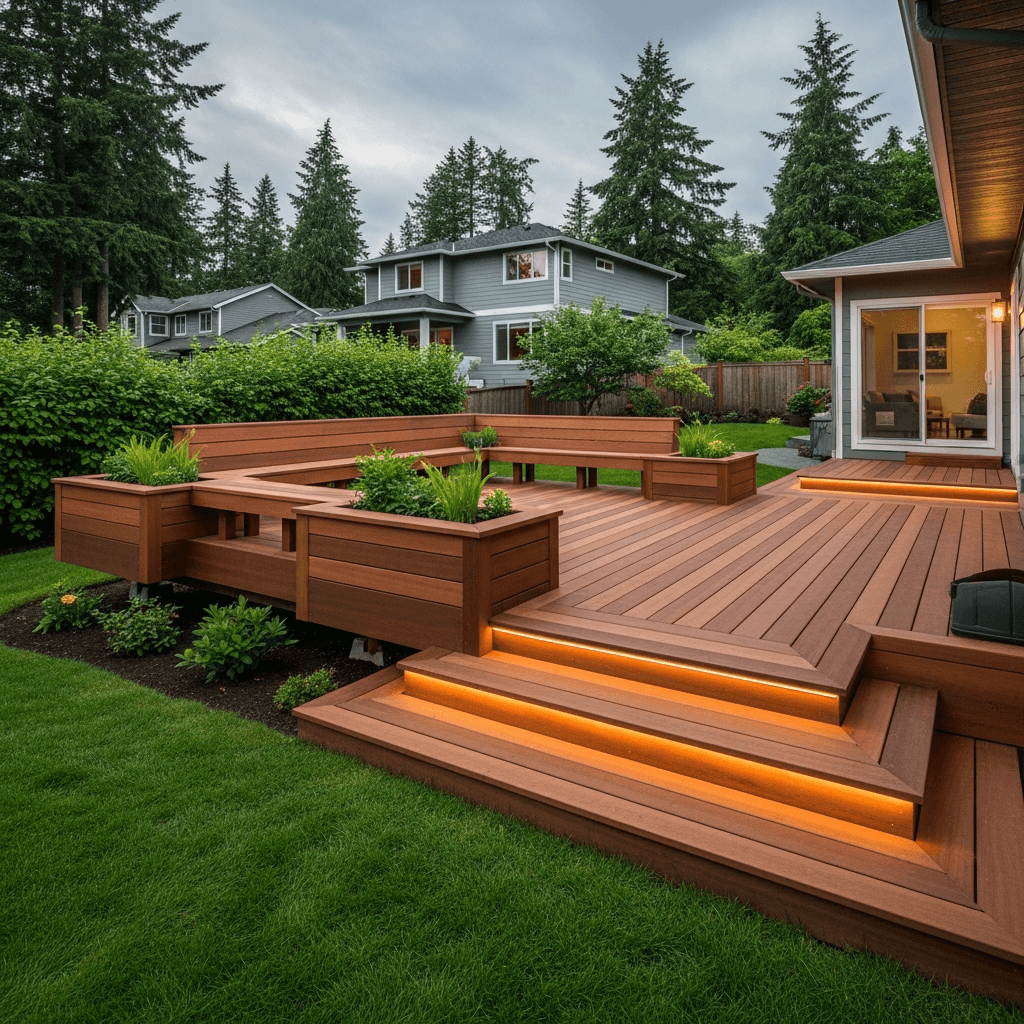
Cedar Deck vs Composite Deck: Which Should You Build?
By CarverMarch 12, 2026
Cedar and composite are the two most popular decking materials in the Lower Mainland — and homeowners ask us to compare them on almost every deck project. Both are good options, but they suit different budgets, lifestyles, and maintenance expectations.
Here's the honest breakdown. We build with both materials, so this isn't a pitch for one over the other — it's what we'd tell a friend.
Cedar vs Composite at a Glance
Factor
Cedar
Composite
Material Cost
$4 – $8 / sq ft
$8 – $16+ / sq ft
Installed Cost
$35 – $55 / sq ft
$50 – $80+ / sq ft
Lifespan
15–25 years (with maintenance)
25–50 years
Maintenance
Stain/seal every 1–3 years
Periodic cleaning only
Appearance
Natural wood grain, weathers to grey
Uniform color, wood-look textures
Feel Underfoot
Natural wood — warm, organic
Synthetic — can get hot in direct sun
Environmental
Renewable, biodegradable
Recycled materials, not biodegradable
Warranty
None (natural product)
25–50 year manufacturer warranty
Disclaimer: The figures above are based on Lower Mainland averages and are intended for educational purposes only. Actual costs vary on a job-to-job basis as material markets move, supply and demand shift, and municipal bylaws change. A free on-site consultation is the only way to get an accurate estimate for your specific project.
The True Cost Over 20 Years
Cedar costs less to install — but maintenance adds up. Over 20 years, the total cost of ownership often converges:
Cedar: Lower install cost + staining every 1–3 years ($500–$1,500 per application for an average deck) + possible board replacement as wood deteriorates
Composite: Higher install cost + minimal ongoing cost (periodic cleaning, no staining) + manufacturer warranty against structural failure
Over 20 years, composite often costs the same or less total — but that only matters if you plan to stay in the home that long
When Cedar Makes More Sense
Budget is tight — cedar gets you a quality deck for significantly less upfront
You want the look and feel of real wood — no composite perfectly replicates natural cedar grain and warmth
The deck is partially covered — covered cedar lasts longer because it's protected from direct rain and UV
You enjoy maintenance — some homeowners actually like the annual ritual of staining their deck
Short-term ownership — if you're selling in 5–7 years, the maintenance savings of composite may not justify the upfront premium
When Composite Makes More Sense
Low maintenance is the priority — no staining, no sanding, no replacing rotted boards
Full sun exposure — composite doesn't grey, split, or warp from UV the way cedar does
Long-term ownership — the 25–50 year warranty makes sense if you're staying in the home
Near water — pool decks and hot tub surrounds benefit from composite's moisture resistance
You want consistent color — composite maintains a uniform appearance without the natural variation of wood
How Our Climate Affects Both
The Lower Mainland is one of the toughest climates for decking in Canada. Heavy rain, limited drying periods, mild winters, and moss growth all take a toll:
Cedar — moisture is the biggest enemy. Without regular sealing, cedar absorbs water, grows mold, and deteriorates faster. West-facing and north-facing decks get hit hardest.
Composite — handles moisture better but can develop mold on the surface if not cleaned. The underside needs airflow — proper joist spacing and ventilation underneath matter.
Both materials need proper structural framing — pressure-treated joists, correct spacing, adequate ventilation below. The decking is the visible part, but the frame is what holds it all up.
The Part No One Talks About: The Frame
Whether you choose cedar or composite, the substructure is pressure-treated lumber. It's the same framing either way — and it's where the structural integrity of your deck lives. Post footings, beam sizing, joist spacing, ledger board attachment, and lateral bracing all need to meet the BC Building Code.
The biggest cost difference between cedar and composite is the surface material — the framing cost is nearly identical. That's why the per-square-foot gap between the two is smaller than you'd expect from material prices alone.
Permits & Building Code
Most decks in the Lower Mainland require a building permit — regardless of material. The permit ensures the structure meets code for load capacity, railings, stairs, and attachment to the house. Your municipality sets the specific requirements, including setbacks from property lines and maximum height above grade.
We handle the permit application, engineering (if required), and inspections as part of the project. The cost of permits and any engineering is included in our quotes — never a surprise after the fact.
Get Your Free Estimate
Every project starts with a free on-site consultation. We assess your site, discuss your goals, and provide a transparent, itemized estimate.
Our Recommendation
For most homeowners in the Lower Mainland who plan to stay in their home long-term, composite is the better value despite the higher upfront cost. The maintenance savings are real, and the material handles our wet climate better than cedar without constant upkeep.
But if you love the look of real wood, have a covered deck, or are working with a tighter budget — cedar is a great option that we're happy to build. Either way, the quality of the build matters more than the material on top.
Ready to Start?
Get Your Free Estimate
Tell us about your project and we'll get back to you with a free, no-obligation estimate. We service the entire Lower Mainland.